


Ammonia Storage and Loading
Market: Chemicals
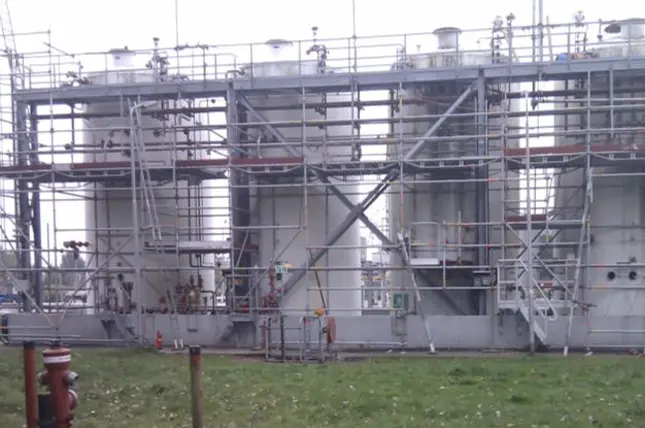
Tebulo Engineering has installed a new control panel. This new panel controls the filling of the four tanks. All alarms and status messages are displayed on this screen. All valve positions and (error) messages are also logged for later investigation.
Technology & Activities
Techniques:
Automation:
- Siemens s7-300
- Wonderware Intouch
- Phoenix Contact Multiplexer
- Siemens e
- Embedded Touchpanel
Activities:
- Software design and phased commissioning of software and hardware.
Project description
DSM is active in the healthcare sector. They produce pharmaceutical ingredients and ingredients for humans and animals. DSM focuses primarily on nutrition and biomedical materials, operating on a scientific basis.
Ammonia is a key raw material for production. Production capacity had to be adjusted. In Delft, the railway was expanded from two to four tracks. This allowed for the expansion and modernization of the train loading of ammonia at the DSM site. This consisted of relay technology without a PLC. The train loading valves were still manually operated. Tebulo Engineering installed a new control panel. The new control panel controls the filling of the four tanks. All alarms and status messages are displayed on this screen. All valve positions and (error) messages are also logged for later investigation.
The process has also been simplified; a truck driver only needs to start the pump using a code to begin loading. The control system ensures that the valves on the next tank are opened when the full level is reached. The connected factories draw ammonia from the tanks 24 hours a day.
The installation continuously supplies ammonia. This process could not be halted during the conversion. To achieve this, the commissioning was spread over several phases. In each phase, parts of the installation were commissioned, followed by decommissioning of other parts. These decommissioned parts could then be converted and tested. This was all done according to a phase-specific test plan.